AI로 처음 개발을 맡겨보는 사람
바이브코딩을 하다 보면 스펙, API, 배포, QA, 버그 같은 말을 계속 만나게 됩니다. 코드를 직접 다 쓰지 않아도 기본 용어를 알면 AI와 개발자에게 더 정확히 요청할 수 있습니다.
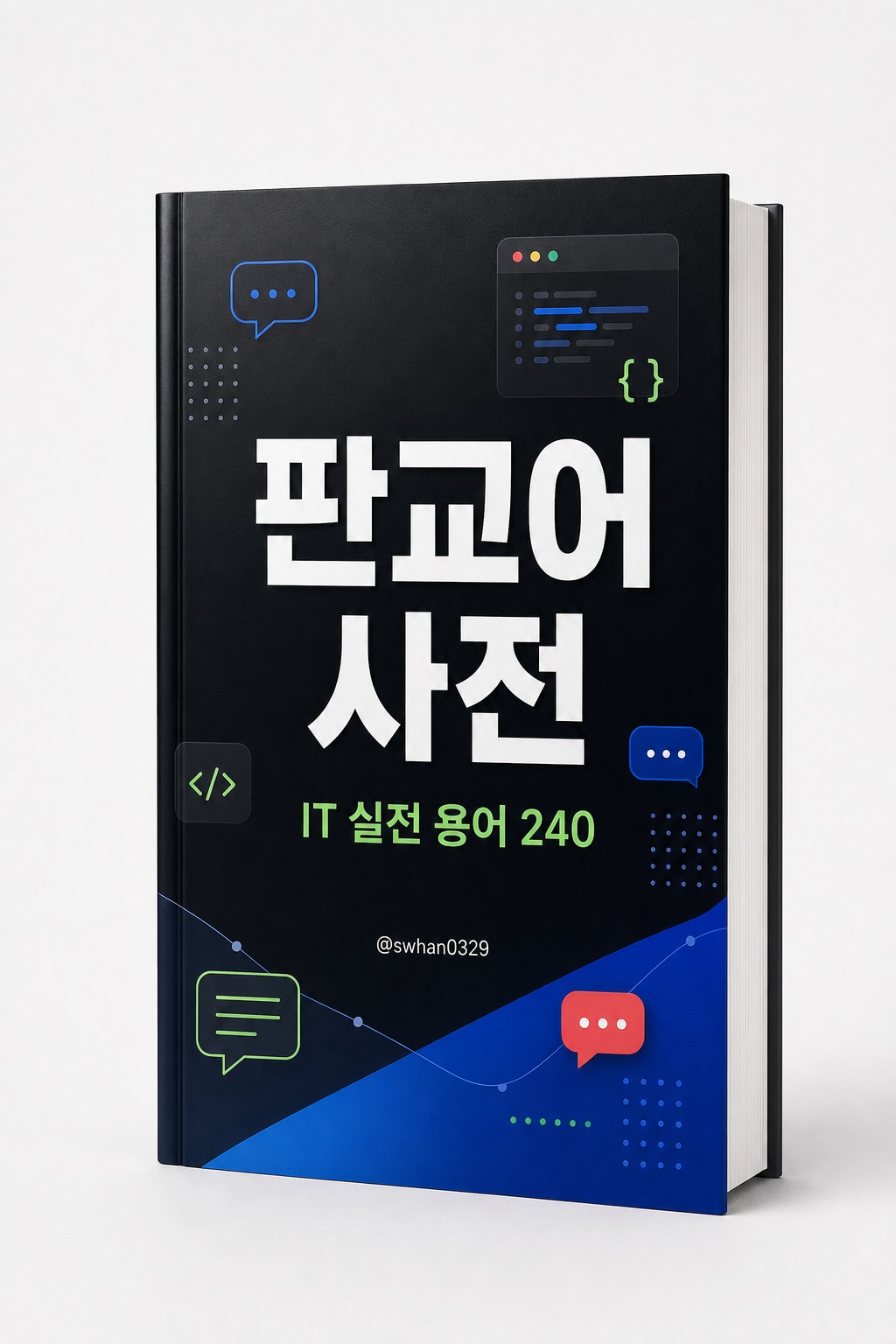
AI로 직접 만들기 시작한 비개발자와 사무직을 위한 IT 실전 용어집입니다. 스펙, API, 배포, QA, MVP처럼 만들다 보면 계속 마주치는 말을 가볍게 익히고, 개발자와 더 편하게 이야기할 수 있도록 정리했습니다.
사실은 판교어 사전이지만, 비개발자가 AI로 개발하고 협업할 때 필요한 개발자 언어 입문서로 읽어도 좋습니다.
A light Korean glossary of 240 IT, software development, AI, and startup terms for people who want to vibe code with AI and talk more comfortably with developers, planners, and startup teams.
It is a glossary of "Pangyo-speak", but it also works as a friendly field guide to developer communication for non-developers building with AI.
바이브코딩을 하다 보면 스펙, API, 배포, QA, 버그 같은 말을 계속 만나게 됩니다. 코드를 직접 다 쓰지 않아도 기본 용어를 알면 AI와 개발자에게 더 정확히 요청할 수 있습니다.
얼라인, 싱크, 컨펌, 듀데잇, 블로커처럼 회의와 슬랙에서 자주 나오는 표현을 실제 문장 예시와 함께 빠르게 익힐 수 있습니다.
MVP, PoC, PMF, 밸류에이션, 런웨이처럼 제품·데이터·투자 대화에서 반복해서 등장하는 말을 가볍게 훑어볼 수 있습니다.
Even when AI writes most of the code, you still meet words like spec, API, deploy, QA, and bug. This glossary helps you ask clearer questions and review work with more confidence.
Learn common meeting and Slack expressions such as align, sync, confirm, due date, blocker, and follow-up through lightweight Korean examples.
Skim practical product, data, and funding terms such as MVP, PoC, PMF, valuation, runway, funnel, and retention.